
Interested in growing your own chestnut trees?
Our extra-large organic chestnuts come fresh from the mature Dunstan hybrid chestnut trees at Diamond R Ranch. These beautiful, hand-selected nuts are large enough for roasting and eating, but we're also offering them specifically to customers interested in growing their own chestnut trees from seed.
Ted and Jody planted their own chestnut trees nearly 40 years ago, when the trees were barely the size of a No. 2 pencil. Today, those trees tower over the ranch and produce the fresh chestnuts we harvest each fall. If you've ever wanted to see what you can grow from a chestnut of your own, this is a great place to start.
Dunstan chestnuts are an American-Chinese hybrid (Castanea dentata × mollissima) valued for combining excellent nut characteristics with strong resistance to chestnut blight. Established Dunstan chestnut trees are generally suited to USDA Zones 5 through 9a.
How to Grow a Chestnut Tree From a Chestnut
Chestnuts need a period of cold, moist conditions before germination, mimicking what would naturally happen when a nut spends winter on the forest floor.
1. Keep your planting chestnuts refrigerated.
Don't let them dry out and don't freeze them. For controlled germination, keep the nuts in a moist, but not soaking wet, medium in the refrigerator. Cold stratification techniques generally use several weeks of refrigeration; Kentucky Extension describes a 10-to-12-week method using moist sand or vermiculite.
2. Watch for the root to emerge.
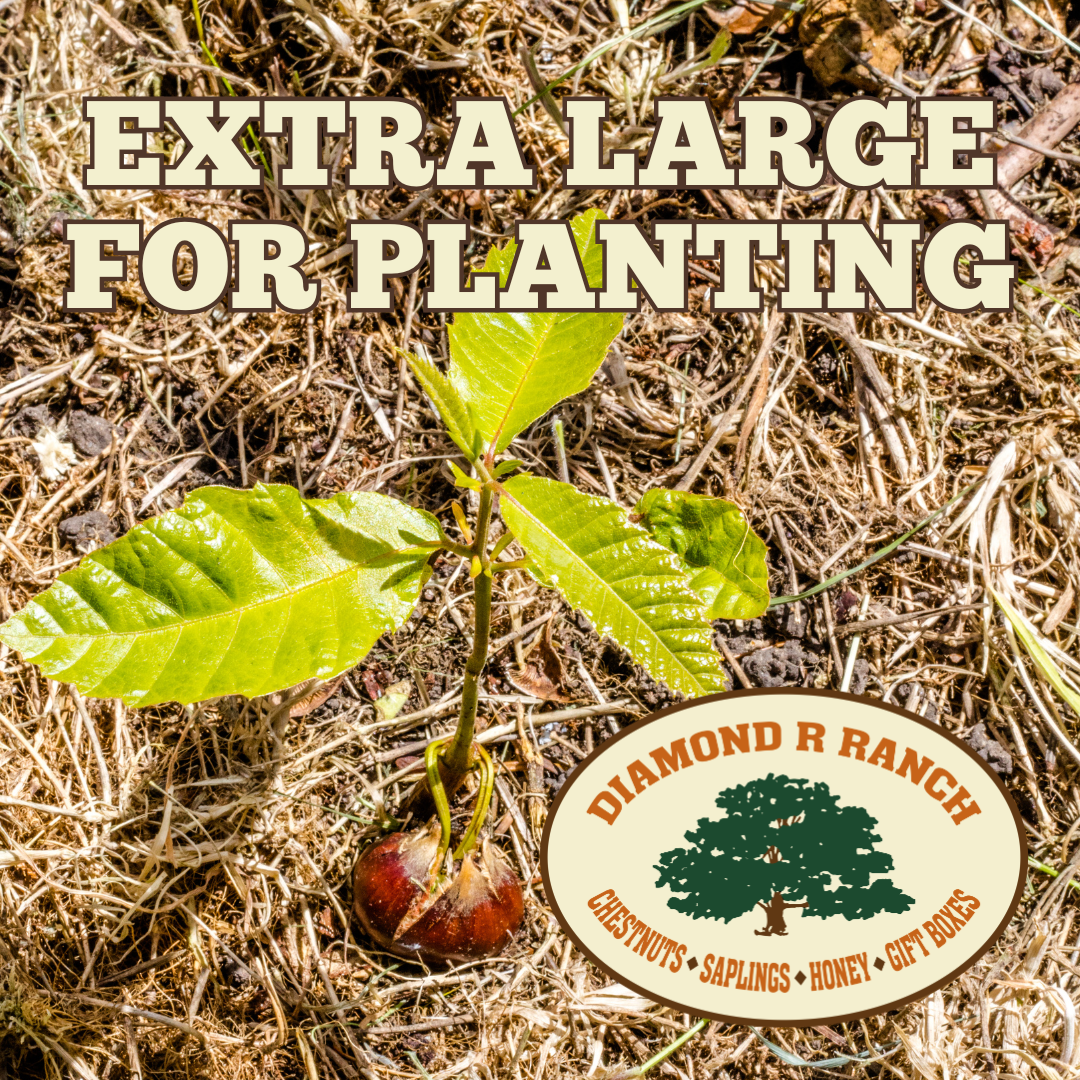
After the cold period, the chestnut can begin germinating. Handle a germinating nut carefully because the new root is delicate.
3. Plant it in a container or its permanent location.
Choose loose, well-draining soil. Planting in a container first can make it easier to monitor the young seedling before transplanting it outdoors.
4. Choose the permanent location carefully.
Ted's favorite advice is simple: chestnut trees don't like "wet feet."
That's good advice scientifically, too. Chestnuts prefer well-drained, somewhat acidic soil and full sun. The American Chestnut Foundation recommends well-drained soil with a pH around 4.5 to 6.5, while Dunstan-specific guidance suggests sandy-loam soil around pH 5.5 to 6.5. Avoid low spots where water collects and very heavy clay soils.
A gently sloping property can be an excellent location because the slope helps with drainage. That can make chestnuts particularly interesting for acreage where some sloped ground isn't convenient for conventional farming.
Give Your Chestnut Tree Plenty of Sun and Room
Chestnuts prefer full sun. If you're growing trees with the goal of eventually harvesting your own chestnuts, you'll also need more than one compatible tree for pollination. Dunstan growing guidance recommends planting at least two, with three or more preferred for good pollination, and approximately 30 to 40 feet apart when growing for nut production.
Young trees need regular watering while becoming established, but good drainage remains essential. Protecting your young seedling from deer and other wildlife is also a very good idea. The deer appreciate chestnuts just as much as we do.
From One Chestnut to a Very Big Tree
Growing a chestnut tree from seed requires some patience, and germination is never guaranteed. But that's also part of the fun.
Fresh organic extra-large chestnuts from Diamond R Ranch are shipped cold and handled carefully to preserve freshness.
Extra-Large Dunstan Hybrid Chestnuts for Eating or Planting
Fresh Organic Chestnuts Shipped From Diamond R Ranch
Want to enjoy a great chestnut now, or grow one for the future?
Our extra-large organic chestnuts come fresh from the mature Dunstan hybrid chestnut trees at Diamond R Ranch. These beautiful, hand-selected nuts are large enough for roasting and eating, but we're also offering them specifically to customers interested in growing their own chestnut trees from seed.
Ted and Jody planted their own chestnut trees nearly 40 years ago, when the trees were barely the size of a No. 2 pencil. Today, those trees tower over the ranch and produce the fresh chestnuts we harvest each fall. If you've ever wanted to see what you can grow from a chestnut of your own, this is a great place to start.
Dunstan chestnuts are an American-Chinese hybrid (Castanea dentata × mollissima) valued for combining excellent nut characteristics with strong resistance to chestnut blight. Established Dunstan chestnut trees are generally suited to USDA Zones 5 through 9a.
How to Grow a Chestnut Tree From a Chestnut
Chestnuts need a period of cold, moist conditions before germination, mimicking what would naturally happen when a nut spends winter on the forest floor.
1. Keep your planting chestnuts refrigerated.
Don't let them dry out and don't freeze them. For controlled germination, keep the nuts in a moist, but not soaking wet, medium in the refrigerator. Cold stratification techniques generally use several weeks of refrigeration; Kentucky Extension describes a 10-to-12-week method using moist sand or vermiculite. Extension Publications
2. Watch for the root to emerge.
After the cold period, the chestnut can begin germinating. Handle a germinating nut carefully because the new root is delicate.
3. Plant it in a container or its permanent location.
Choose loose, well-draining soil. Planting in a container first can make it easier to monitor the young seedling before transplanting it outdoors.
4. Choose the permanent location carefully.
Ted's favorite advice is simple: chestnut trees don't like "wet feet."
That's good advice scientifically, too. Chestnuts prefer well-drained, somewhat acidic soil and full sun. The American Chestnut Foundation recommends well-drained soil with a pH around 4.5 to 6.5, while Dunstan-specific guidance suggests sandy-loam soil around pH 5.5 to 6.5. Avoid low spots where water collects and very heavy clay soils. The American Chestnut Foundation
A gently sloping property can be an excellent location because the slope helps with drainage. That can make chestnuts particularly interesting for acreage where some sloped ground isn't convenient for conventional farming.
Give Your Chestnut Tree Plenty of Sun and Room
Chestnuts prefer full sun. If you're growing trees with the goal of eventually harvesting your own chestnuts, you'll also need more than one compatible tree for pollination. Dunstan growing guidance recommends planting at least two, with three or more preferred for good pollination, and approximately 30 to 40 feet apart when growing for nut production.
Young trees need regular watering while becoming established, but good drainage remains essential. Protecting your young seedling from deer and other wildlife is also a very good idea. The deer appreciate chestnuts just as much as we do. The American Chestnut Foundation
From One Chestnut to a Very Big Tree
Growing a chestnut tree from seed requires some patience, and germination is never guaranteed. But that's also part of the fun.
Fresh organic extra-large chestnuts from Diamond R Ranch are shipped cold and handled carefully to preserve freshness.